How Much Does Commercial Epoxy Flooring Cost in Atlanta?
If you're budgeting a flooring project, you want a number, not a sales pitch. So here it is: most commercial epoxy flooring in the Atlanta area runs between $4 and $12 per square foot installed. Where your project lands in that range depends on the condition of your concrete, the system you choose, and the size of the space.
That's a wide spread, so let's break down exactly what moves the number, and where facility managers most often get surprised.
The Short Answer: Typical Price Ranges by System
Different epoxy systems solve different problems, and they're priced accordingly.
A thin-mil epoxy coating, two coats rolled over prepared concrete, generally falls at the low end, around $3 to $5 per square foot. It's a fit for light-traffic spaces like storage rooms and mechanical areas.
A broadcast system with quartz or decorative flake lands in the middle, roughly $6 to $10 per square foot. This is the workhorse for showrooms, retail spaces, and commercial kitchens that need slip resistance and a finished look.
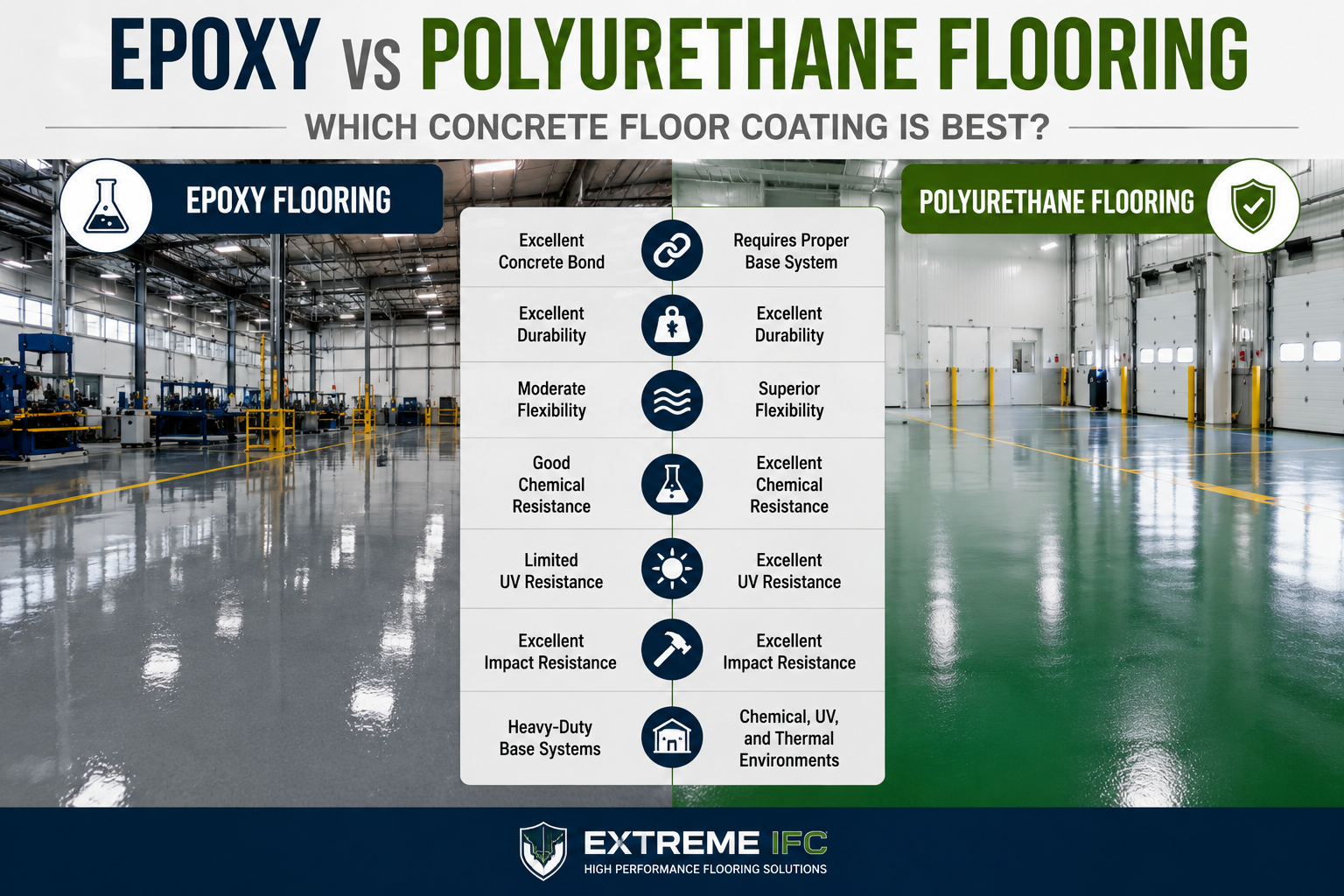
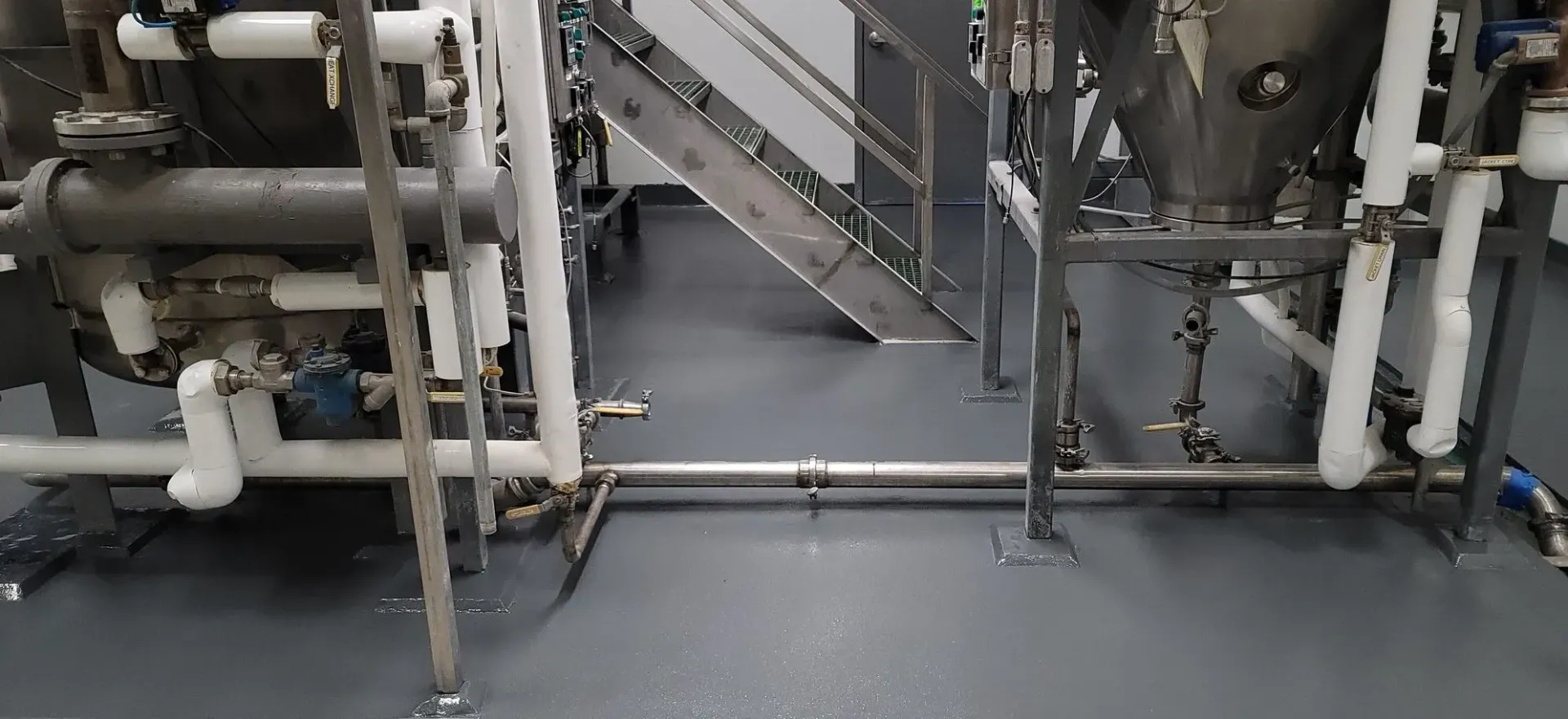
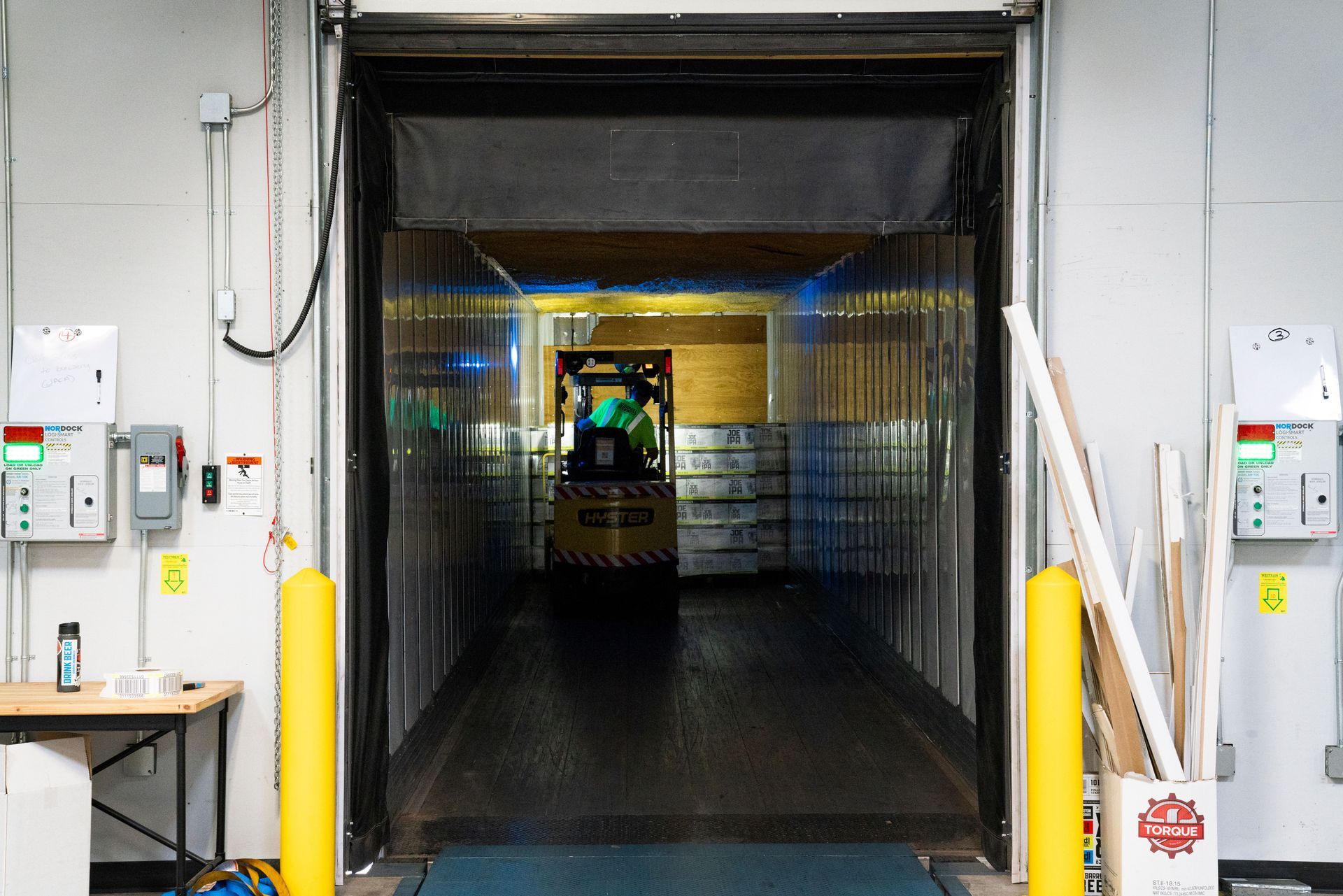
A full-thickness industrial system, high-build epoxy or urethane cement for harsh environments, typically runs $9 to $15 per square foot. Food processing plants, breweries, and manufacturing floors live here because nothing thinner survives the abuse.
What Drives Commercial Epoxy Flooring Cost Up or Down
Surface Preparation Is the Biggest Variable
Here's what most estimates gloss over: the coating is only half the job. Before any epoxy goes down, the concrete has to be mechanically profiled through shot blasting or grinding so the new system can bond. If your slab has old adhesive, existing coatings, oil contamination, or cracks that need repair, prep costs climb.
A clean, newer slab might need minimal prep. A 40-year-old warehouse floor with three layers of failed coatings could need days of removal work before the first drop of epoxy is mixed. That difference alone can swing a quote by several dollars per square foot.
Square Footage Works in Your Favor
Epoxy pricing drops as square footage rises. Mobilization, equipment, and crew costs get spread across more floor. A 2,000 sq ft space will almost always cost more per square foot than a 20,000 sq ft warehouse using the same system. If you're phasing a larger project, ask whether combining phases saves money. It often does.
🔧 Job Site Reality: Get your moisture tested before you sign anything. Atlanta's humidity and older slabs without vapor barriers cause more epoxy failures than any other factor. A $300 moisture test can save you from a $30,000 floor failure. If readings come back high, a moisture-mitigating primer or urethane cement system is the fix, and it's far cheaper to plan for it than to repair a delaminated floor later.
Cost Factors Specific to Atlanta Facilities
Atlanta's building stock matters here. Many industrial buildings around the metro, especially in older corridors near the rail lines, sit on slabs poured decades ago without vapor barriers. Moisture vapor pushing up through concrete is the number one killer of epoxy floors, and it's more common in Georgia than facility owners expect.
Downtime is the other local reality. If your facility runs six or seven days a week, installation may need to happen overnight or over a holiday weekend. Fast-cure systems make that possible but add material cost. Worth every penny compared to shutting down production.
Why the Cheapest Quote Usually Costs More
When three quotes come in and one is dramatically lower, something got cut. Usually it's the prep. A coating applied over poorly profiled concrete will peel, and then you're paying twice: once to remove the failed floor, again to do it right.
Extreme IFC has spent over two decades doing one thing well across Atlanta and the Southeast: high-performance concrete and resinous flooring. That focus is why general contractors and facility managers bring them the jobs other installers walk away from, including a FEMA kitchen floor that had been rejected as unrepairable before Extreme IFC completed it and won an industry Project of the Year award for the result.
An experienced contractor will also tell you when epoxy isn't the answer. Sometimes polished concrete delivers what you need at a lower lifetime cost. The right recommendation depends on your facility, not on what the installer wants to sell.
💡 Worth a Second Look: Don't compare flooring bids on install price alone. A $5/sq ft coating that lasts 5 years costs more per year than a $10/sq ft system that lasts 20. Ask every bidder the same question: "What's the expected service life, and what does the warranty actually cover?" The answers tell you more than the price does.
How to Get an Accurate Number for Your Facility
Ballpark ranges get you budgeting. A real number requires a site visit. Any quote worth signing should be based on the actual condition of your slab, moisture readings, your traffic and chemical exposure, and your downtime window.
When you request a walkthrough, have these ready: the square footage, what currently covers the floor, what the space is used for, and when the work could happen. With those four answers, a qualified contractor can quote accurately instead of padding the number to cover unknowns.
The Bottom Line on Your Bottom Floor
Commercial epoxy flooring in Atlanta runs $4 to $12 per square foot for most projects, with surface prep and system choice driving where you land. Budget for proper preparation, weigh lifetime cost over install price, and get a moisture test before committing. Ready for a number based on your actual floor? Request a free quote from Extreme IFC and get a walkthrough scheduled.
FAQs
What's the best way to estimate commercial epoxy flooring cost before getting quotes?
Multiply your square footage by $4 to $12 depending on how demanding your environment is: light traffic at the low end, food processing or heavy manufacturing at the top. Then add a buffer if your slab is older, has existing coatings, or has never been moisture tested. That gives you a realistic planning range before a contractor walks the site.
Does commercial epoxy flooring cost more than replacing the concrete?
Almost always less. Full slab replacement runs several times the cost of a resinous overlay once you factor demolition, disposal, new concrete, and cure time measured in weeks rather than days. Unless your slab is structurally failing, coating or resurfacing the existing concrete is the more economical path.